Online Quran Classes vs. Weekend Islamic School: Which Is Right for Your Child?
An honest comparison of weekend Islamic school and 1-on-1 online Quran classes — attention, progress, flexibility, community and cost.

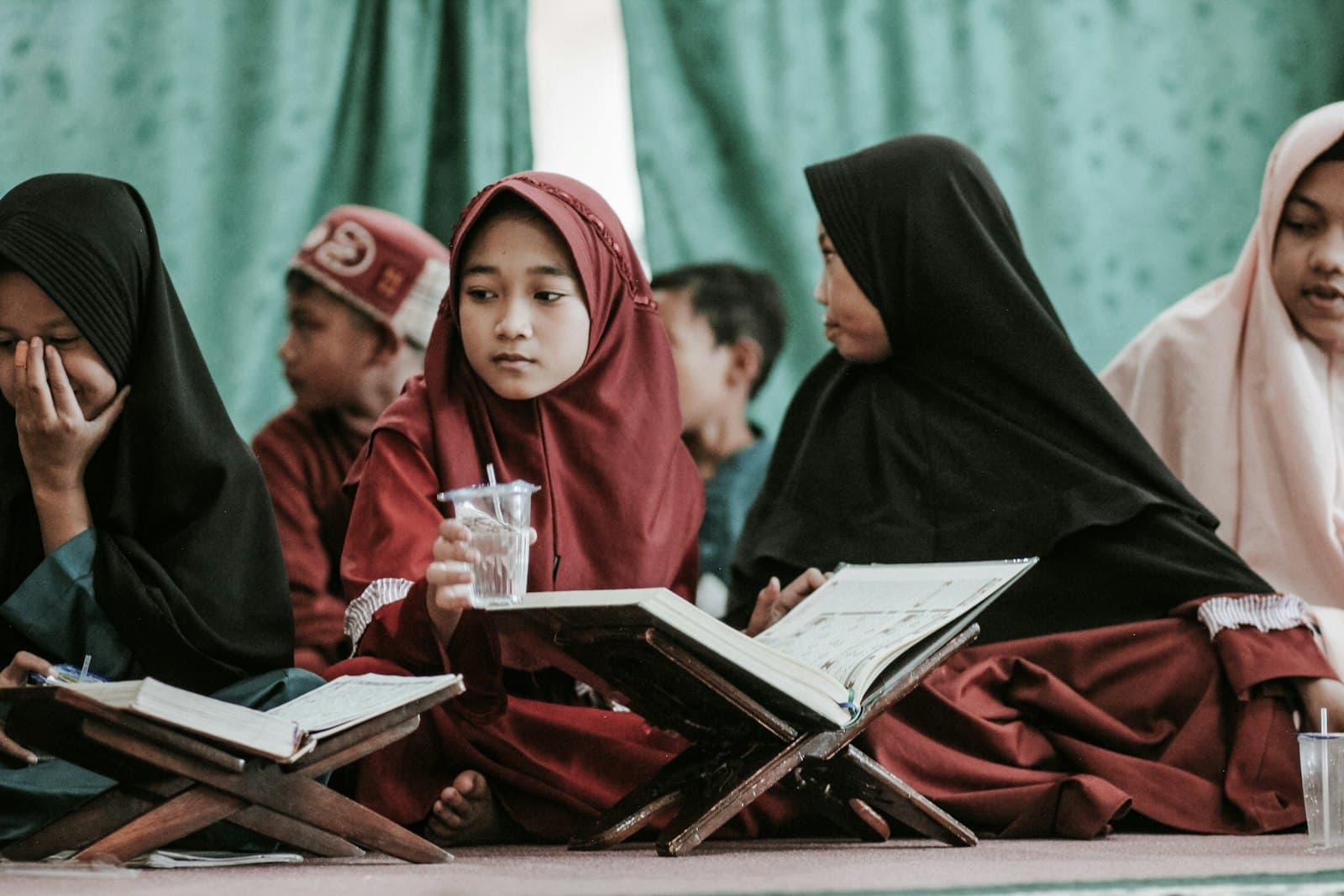
For decades, weekend Islamic school has been the backbone of Quran education in America. Many of us grew up spending Saturday or Sunday mornings at the masjid. Today, more and more families are adding — or switching to — one-on-one online Quran classes.
So which is right for your child? The honest answer: it depends on your goals, and for many families the best answer is both. Here's a fair comparison.
What weekend school does well
- Community. Children make Muslim friends, and that sense of belonging is precious — especially in areas where Muslim kids are a small minority at school.
- Connection to the masjid. Regular time at the masjid builds a lifelong attachment to it.
- Broad Islamic education. Many programs cover Islamic studies, Arabic and character alongside Quran.
- Cost. Weekend programs are often affordable, especially when subsidized by the community.
Where weekend school can struggle
- Limited recitation time. In a class of fifteen to twenty students, each child may recite to the teacher for only a few minutes each week.
- One day a week. Long gaps between lessons make it hard to build fluency or keep up memorization.
- One pace for everyone. Fast learners get bored; students who need more time fall behind.
- Logistics. Weekend sports, family commitments and long drives can make attendance inconsistent.
What online one-on-one classes do well
- Full attention. The teacher hears every letter, so Tajweed mistakes are corrected immediately.
- Frequency. Short classes three to five times a week build fluency much faster.
- Personal pace. Each child moves on when they're ready — not when the class is.
- Flexibility. Classes fit around school and activities, in your own time zone.
- Teacher choice. Families can request a female teacher or a specialist for young children.
Where online classes need support
- Community. Online classes don't replace friendships at the masjid — which is why many families keep both.
- Home environment. Younger children need a quiet space and a parent nearby, especially at first.
Side-by-side comparison
| Weekend school | 1-on-1 online | |
|---|---|---|
| Recitation time per week | A few minutes per child | Every minute of every class |
| Classes per week | Usually 1 | 2–5, your choice |
| Pace | Set for the whole class | Set for your child |
| Scheduling | Fixed weekend times | Flexible, 7 days a week |
| Travel | Drive to the masjid | From home |
| Community | Strong | Build it at the masjid alongside |
| Female teacher option | Varies | On request |
How to decide
Ask yourself three questions:
- Is my child actually improving in recitation? If progress has stalled, more one-on-one time is usually the missing ingredient.
- Is Hifz a goal? Memorization needs near-daily contact with a teacher for new lessons and revision.
- Does our schedule allow consistent attendance? If weekends are unpredictable, flexible weekday classes can bring stability.
Try it and see
The best way to compare is to experience a real online lesson. Book 3 free trial classes for your child — no credit card required — and see how they respond to a teacher who's focused entirely on them. Explore our online Quran classes for kids to learn more.